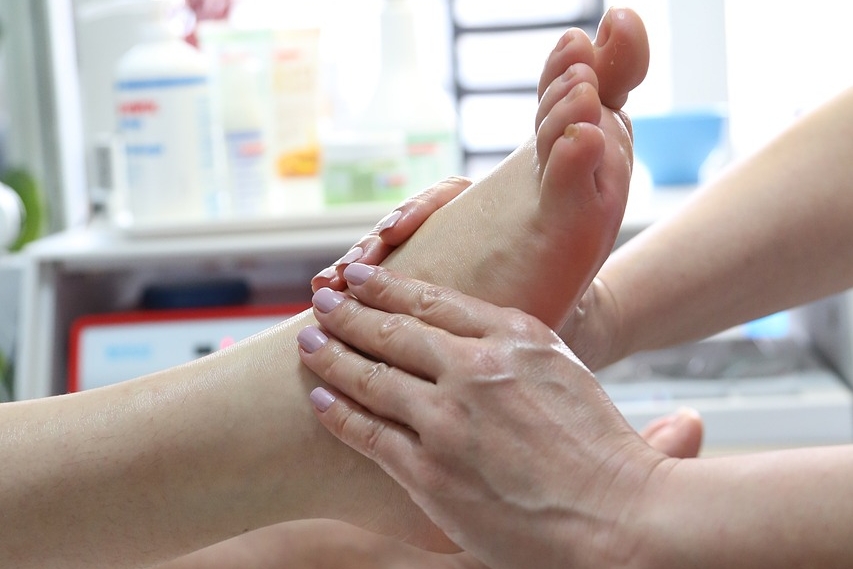
Today Foot problems like corn foot, plantar warts, and pitted keratolysis are becoming very common. Due to modern lifestyle habits, footwear choices, and long standing hours. These conditions affect walking style, and even lead to psychological stress. Understanding the differences is crucial for effective treatment.
What Is Corn Foot?
Corn Foot can arise from many different causes, such as wearing high heels or tight shoes, not using socks, being overweight, swelling formation, hammer toes, and foot deformities like bone spurs.
It can also be caused by pressure and constant friction from repeated movements of the foot.
The symptoms and signs of corn foot include redness the skin, heat, a firm, rough region of skin with raised bumps, flaky, dry skin, pain when walking, and restriction of daily activities due to pain.
As per the Siddha classical literature, kaalaani (corn foot) occurs due to walking over the uneven surface, and small stones and unremoved thorn pricks can induce the keratinization on the outer layer of the
skin that affects the sole to change as hard and rough.
The hardening is due to the accumulation of kabham (a combined form of earth and water), which could be normalized by the application of heat given by the uloga suttigai (heated metal probe application from corn foot ).

Differential Diagnosis: Plantar Wart vs Corn vs Pitted Keratolysis
- Corns and Calluses (Hyperkeratosis
- These are not caused by a virus or infection. They are the skin’s natural defense mechanism against persistent friction.
- Cause: Continuous pressure or friction from tight footwear.
- Features: 1.Cone-shaped thick skin
- 2. No black dots3.Pain on direct pressure
- 3.Pain on direct pressure4.Usually over bony prominences
- 4.Usually over bony prominences
- Plantar Wart (Verruca Plantaris)
- It often has black dots in the center (clotted blood vessels).
- It appears mostly on: The heel, The ball of the foot , Between the toes.
- Cause: Plantar warts are caused by Human Papillomavirus (HPV) entering through small cuts, cracks, or soft skin.
- Pitted Keratolysis
- Cause: A bacterial infection (typically Corynebacterium or Cytotococcus species) that thrives in moist, sweaty environments.
- Features: Multiple tiny pits or holes on soles, Bad odor, Common in people with sweaty feet, No thick hard skin, No black dots.
Medical Treatment:
- Cryotherapy – Freezing the wart with liquid nitrogen.
- Salicylic Acid Ointments – Softens and dissolves the wart gradually.
- Laser Therapy – For stubborn or deep lesions.
- Minor Surgical Removal – Only for severe cases.
- Soak feet in warm water and clean with mild soap.
- Apply coconut oil, castor oil, or aloe vera to soften hard skin.
- Use pumice stone gently to reduce thick callus (not on active wart).
- Wear soft, wide footwear with cushioning.
- Avoid sharp blades, knives, or shaving the wart — this can worsen infection.
- Apply Antibiotic creams, keeping feet dry.
- Traditional options: Turmeric + oil paste Camphor oil Kasturi manjal + castor oil
- Herbal powders like Sivanar Vembu chooranam (only under qualified siddha guidance).
When to Avoid Home Treatment
- Seek medical advice if you have:
- DiabetesHeart disease
- Heart diseasePoor circulation
- Poor circulationSevere pain or pus
- Severe pain or pusRapidly growing lesions
- Rapidly growing lesions
Prevention Tips
- Never walk barefoot in public areas (pools, gyms, hostels).
- Keep feet clean and dry always.
- Change socks daily.
- Avoid sharing towels, socks, and footwear.
- Strengthen immunity with a healthy diet.
Frequently Asked Questions (FAQ)
- Are plantar warts contagious?
- Yes. They spread through contaminated surfaces like bathrooms, swimming pools, and footwear.
- Can corn go away on their own?
- If the pressure source is removed, small corn may disappear. Hard corn usually needs treatment.
- Is pitted keratolysis dangerous?
- Not dangerous, but causes bad odor and infection. It improves quickly with antibiotics.
- How do I know if it’s a wart or a corn?
- Black dots → wart
- Pain on direct pressure → corn
- Large flat area → callus
- Can I cut the corn at home?
- No. Cutting may worsen infection and cause deeper wounds.
Conclusion
Common foot conditions like corns, calluses, plantar warts, and pitted keratolysis are generally not dangerous, they can significantly impact quality of life.
Accurate identification is the first step to effective treatment. Early intervention with appropriate home care or doctor-guided therapies ensures a quicker recovery and a return to pain-free movement.

Dr. Augastina B.S.M.S., PGDY, is a passionate Siddha Doctor with a heart of gold. She believes in healing one step at a time. In her writing, you’ll find not just knowledge, but genuine care and a holistic approach to health and well-being.